Lessons from The Table
by Mike Peercy, Executive Director of Fostering Grace
.If you’ve spent some time in the woods, you will recognize that most trees don’t grow absolutely straight. When those trees are harvested for lumber and milled into standard dimensions, they are (in most cases and particularly in the case of softer woods like the fir I was using for this project) dried in a kiln to prepare it for use.
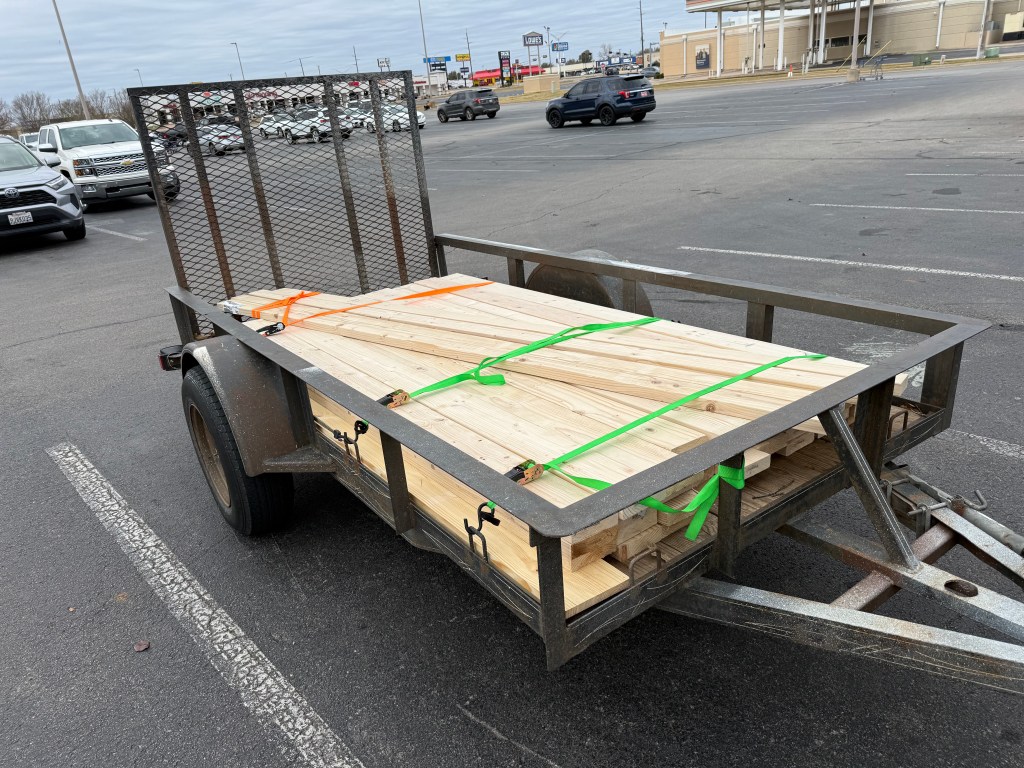
When I went to the lumber yard to purchase a huge pile of 2”x6”x8’ boards, I spent about 45 minutes digging through the stack to try and find the straightest boards possible. But… it is not an exact science.
What I found was that so many of these boards had just a little bit of a warp to them that I couldn’t see by just holding it up and looking down the length. As I tried to plane each to a smoother, more consistent surface, I began to see more variation than I had really anticipated.
Let me say for those who may have a lot more experience than I, I realize that this is one of the many reasons fine furniture is not generally produced from soft woods like fir and pine. But my desire was to be as economical as possible and to produce a rustic, farm-style table. The kiln-dried fir seemed the most feasible and readily available.
Even with my new planer (new tool to me—long desired, finally purchased to do this project), I began to see that the natural twisting and warping in these boards doesn’t just come out with my milling process. It takes a lot of work and a lot of skill. And even then I realize that factors like temperature and moisture and such can cause the wood to move and those irregularities to become more obvious.
But this is so much a part of our human experience. The things we go through in our lives—especially the things we categorize as relational trauma—do not disappear just because we are brought into a much more safe and stable situation. Even many years late, circumstances can reveal the warp or twist in our story. Like the bend of the tree from which it was cut is written in the fibers of this lumber, the hard things in our stories are written in our bodies and brains and beliefs… and they can suddenly show up in our behaviors.
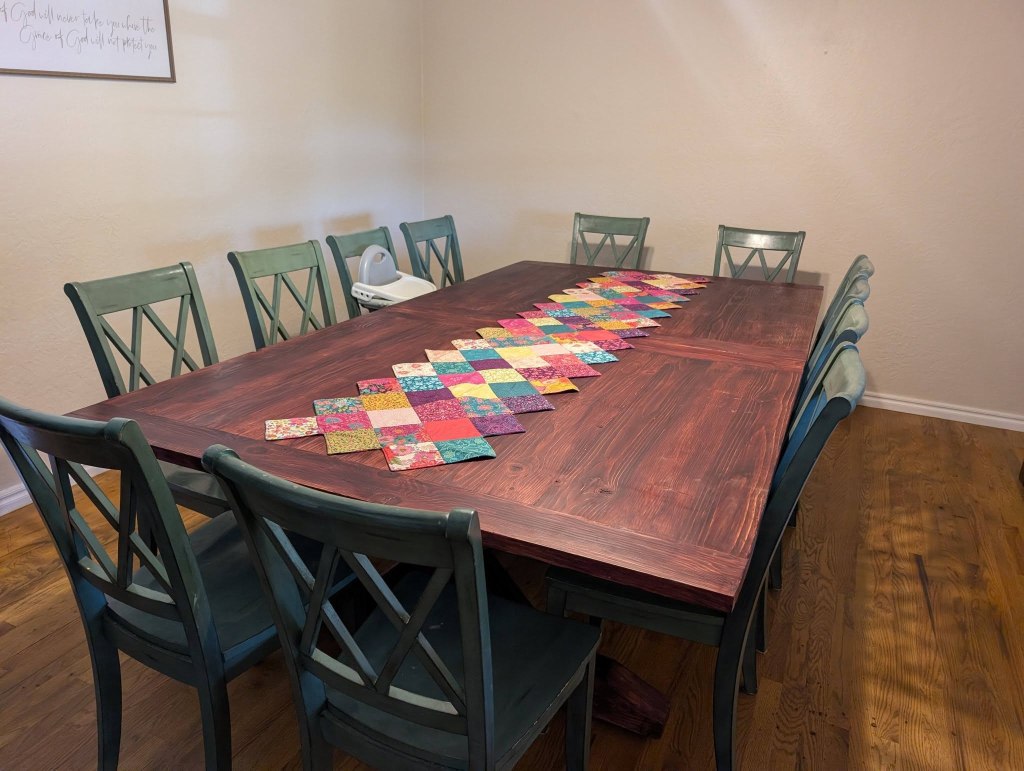
I can’t promise that the table I made will not bend and separate under extreme conditions. But I can say that I put lots of thought and energy (and glue and dowels and a few screws) into building the strongest connections I could manage. I believe that the strength of the table I built is in its connections from piece to piece.
Meanwhile, the family that gathers around this table is reflected so much in its construction. Each piece has its own story of challenge, but the real strength is in the connections between all of the individual members of the family. The connections between them will hold each other up and endure the hardships that are inevitable when those hard things are a part of their stories.
I was reflecting on the description by apostle Paul of how the church, the body of Christ, is to grow and mature. He said that “the whole body, joined and held together by every joint with which it is equipped… makes the body grow so that it builds itself up in love.” What are the “joints” he refers to? Those are the connections between the different parts of the body. In other words, the body is made strong and whole and mature by the healthy connections between the parts.
In the same way, the family that will gather time and time again—hopefully for a few generations to come—around this table will be full of strong, healthy connections that will allow them to endure every hardship they encounter.
Yes, there are warps and twists in the pieces that may not be obvious to the eyes… but the strength is in the connections.


Leave a comment