
by Mike Peercy, Executive Director of Fostering Grace
I was reflecting on the conversation shared with me by a foster mom a couple of years back that she had with a little fellow in her care. He told her that he had never lived in a fancy house before. She inquired a little more and learned that what made this house fancy in his mind was that he had a bed. It seems he had never had his own bed before.
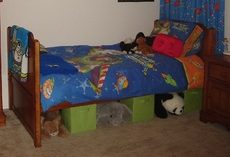
To most of us, that seems a pretty low bar to be considered “fancy.”
This conversation highlights the fact that so often kids that come into care have had a very different experience. This mom went on to explain that it finally began to make sense that, when this little one came to live in her home and she was putting him in a big bed by himself in a dark room by himself at the end of the hallway away from the rest of the family… it was an utterly foreign and thus deeply scary experience.
It’s important that we try to recognize the assumptions that we make when we interact with someone. In some cultures or situations there is little likelihood of separate bedrooms for family members. Sometimes people get by with a pallet on the floor or sleeping on couches. Some kids have never really been alone in a room. There are many possible reasons for these things—from poverty to preference to generational patterns—but it’s so crucial to question our assumptions about the circumstances.
I guess what I am saying is that your experience or preference or pattern is not the only way and is certainly not necessarily the best way. It’s just your way.
I often tease a friend of mine who was calling AAA for assistance and tried to direct them to a particular gas station simply by calling it “the south Love’s.” It was located on the southwest side of Oklahoma City… but it was not by any means the southernmost Love’s location in that metro area. I quickly suggested a more accurate description referencing the intersection where we were stuck. But it was a default to his own experience. And that’s natural. But it caused an inaccurate and ineffective communication.
When we approach our interactions with people with curiosity, seeking to learn more about their experience and perspective, we can begin to test our assumptions and more effectively meet them where they are.
Maybe the gentleman sleeping on a park bench experienced a traumatic loss that changed the way he makes choices. Maybe there is more to the story than what seems to us like a failure to succeed. Maybe there’s a frame of reference that would make sense if we knew the whole story.
Perhaps that child that seems terrified in a moment when they are probably more safe and secure than they have ever been in their lives has a reason to feel as though they are not safe. Perhaps the very thing we have done to bring them comfort has sparked fear. Perhaps there is more to the story than we can see through the lens of our own experience and the filter of our own assumptions.
Maybe our assumptions are getting in the way of our understanding.
Maybe they don’t know how to sleep in a place that’s so “fancy.”
Hmmm… fancy that.
 Fostering Grace
Leave a comment